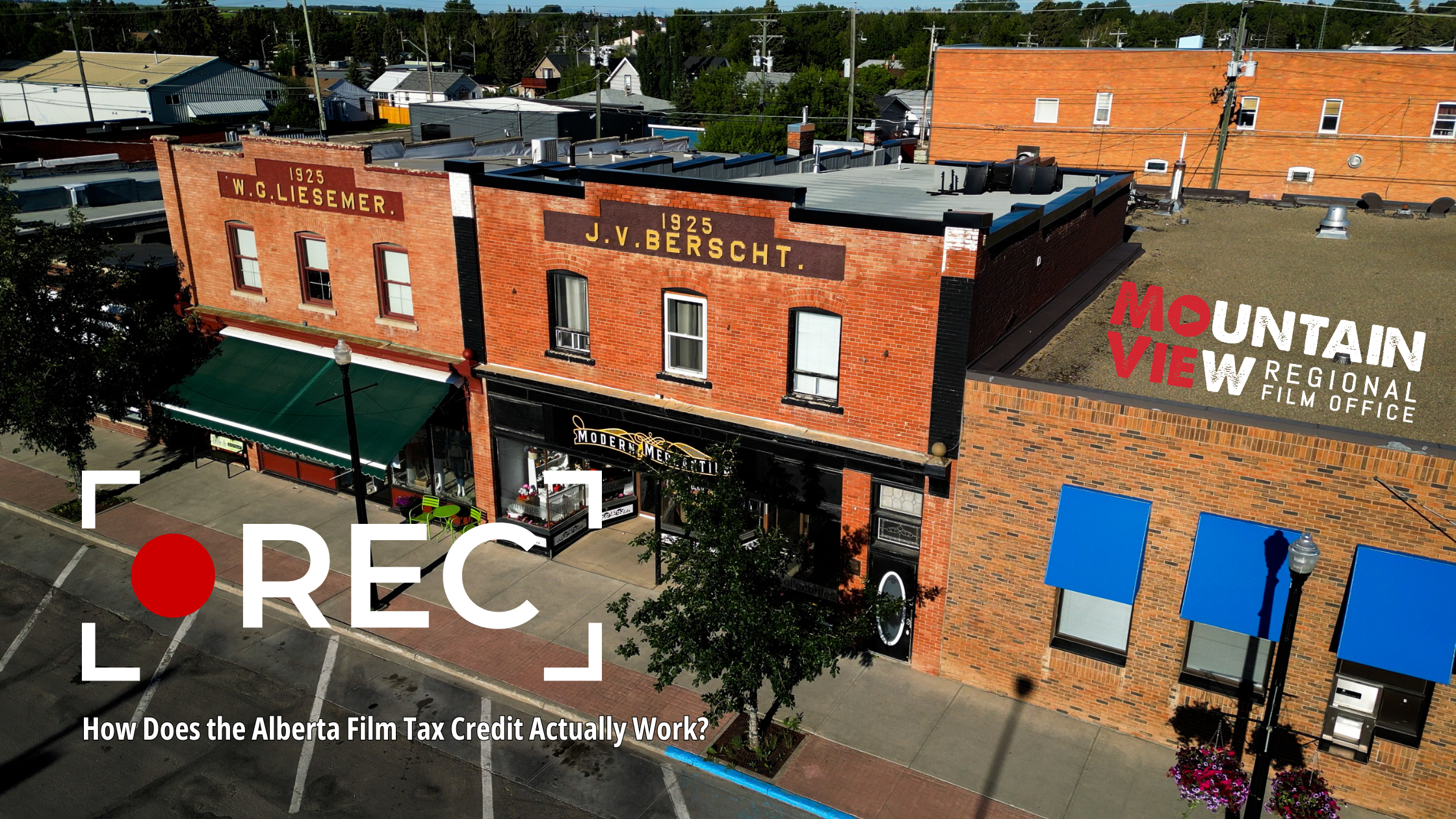
If you’ve spent any time researching where to shoot your next project, you’ve probably heard the number: 30%. It gets tossed around in pitch decks, forum threads, and location scouting conversations as if it’s a flat rate that applies the moment you cross into Alberta. It’s not quite that simple, and the details matter enough that it’s worth breaking down properly.
Here’s what that 30% actually is, how it’s built, and where a regional film office like ours fits into helping a production reach it.
The Base: A 22% Credit
The foundation is Alberta’s film and television tax credit, set at 22%. To qualify, a production needs to be incorporated in Alberta, or have at least one equity partner based in the province, and meet a minimum project spend of $500,000. That 22% applies to eligible Alberta spend, which for most productions is the bulk of the budget.
This base credit is available whether you’re filming in downtown Calgary or out here in Mountain View County. It’s not the rural piece. It’s the starting point everyone gets if they qualify.
The Top-Up: An Additional 8%
The rural incentive is where the number climbs to 30%, and it’s also where the most confusion happens. Productions that complete 75% of their principal photography in a qualifying rural region can receive an additional 8% on top of the base 22%. Combined, that’s the 30% people are referring to.
The distinction matters. It’s not a 30% rural credit that exists on its own. It’s 22% plus 8%, and the 8% only applies once a production has actually hit that 75% rural photography threshold. Miss the threshold, and you’re working with the base 22%, not 30%.
The Catch You Need To Know
The credit applies to eligible Alberta spend, and there’s some nuance here worth understanding early rather than discovering partway through a shoot. If a production brings in labour from outside Alberta, that portion of spend doesn’t count the same way toward the credit as hiring Alberta-based crew does. It’s not disqualifying, but it does affect the math, and it’s one more reason to loop in the right people before you lock a budget.
This is also usually the point where productions comparing jurisdictions start doing real math instead of working off headline numbers. A credit that looks smaller on paper than what’s offered in BC or Ontario can still make sense once you factor in crew availability, proximity to Calgary, and what a rural shoot actually costs to run day to day. The percentage is only one part of the decision.
Where MVRFO Comes In
This is where our role gets practical. As Alberta’s first and only regional rural film office, we spend a lot of time helping productions understand two things: what actually counts as a qualifying rural region, and how to structure a shoot so that 75% threshold is realistic rather than a stretch.
That might mean walking through which of our locations fall within the qualifying area, or thinking through logistics so principal photography stays rural without creating headaches for the rest of the production. We also act as a concierge for the practical side, connecting productions with local crew, vendors, and permitting information, so that hitting the rural threshold doesn’t come at the cost of a smooth shoot.
We’re not the ones who confirm your credit. We’re the ones who help you get in position to claim it.
The Bottom Line
Here’s the short version: 22% is the base credit for eligible Alberta productions. An additional 8% is available for productions that complete 75% of principal photography in a qualifying rural region, bringing the combined total to 30%. It’s not automatic, and it’s not a flat rural rate. It’s a base plus a threshold-based top-up, and the details of eligibility and eligible spend are specific enough that they’re worth getting right from the start.
For final confirmation on eligibility, spend calculations, and everything specific to your production, the Alberta Film Commission is the authoritative source, and we’d always point you there directly.
What we can do is help you figure out, in plain language, whether the Mountain View region makes sense for your project and what it would take to reach that rural top-up.
Thinking about filming in Alberta and want to know if your project could qualify for the rural incentive? Contact the Mountain View Regional Film Office and let’s talk it through.